
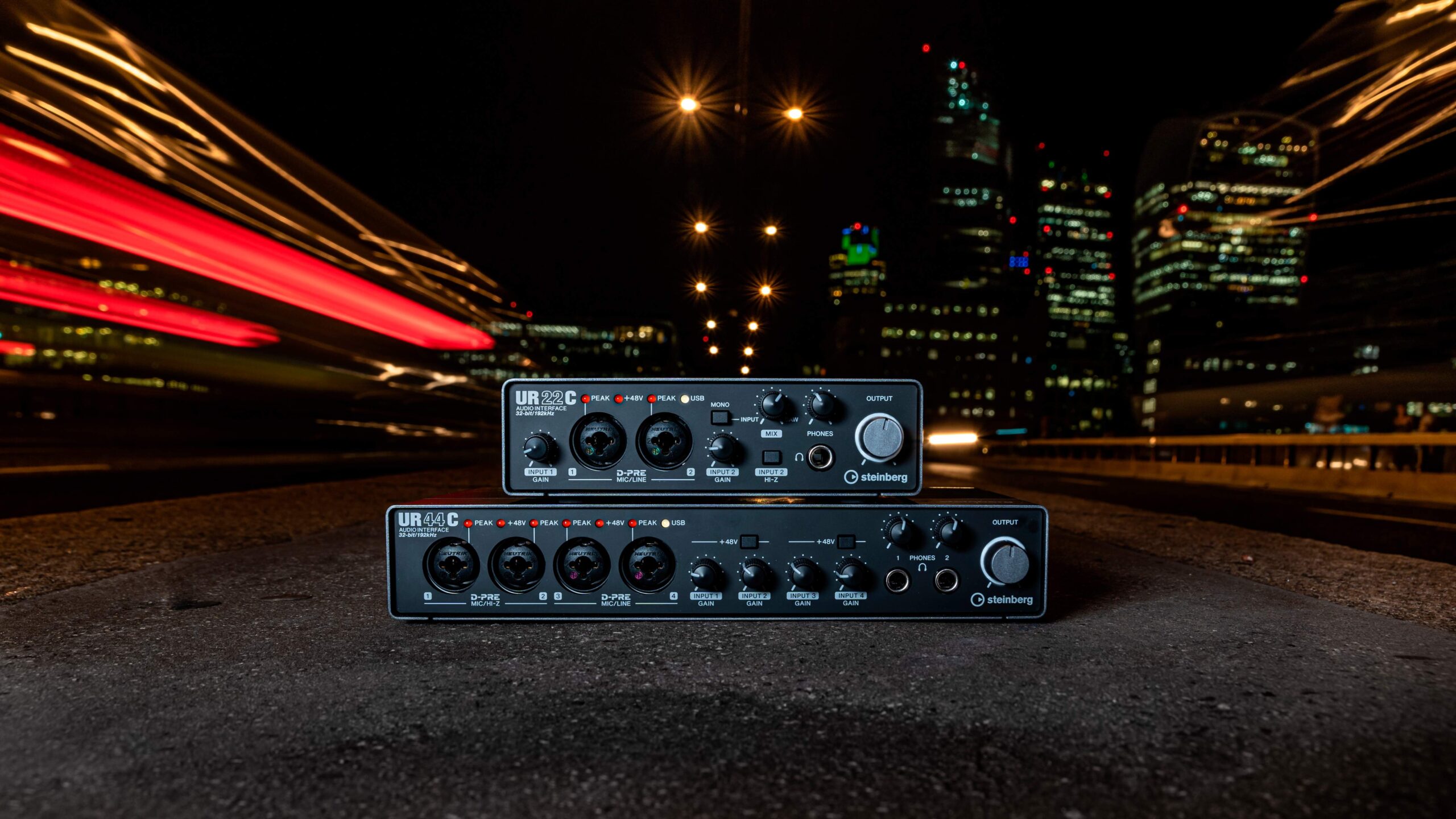
A small recording box can change a desk faster than a new microphone. The Steinberg UR22C USB Audio Interface is getting fresh attention because a sharp price drop puts it back in the range where singers, guitar players, podcasters, and bedroom producers start doing serious math. For U.S. buyers watching a Steinberg UR22C deal, the question is not only “How cheap is it?” It is “Will this still feel useful two years from now?” That answer matters more than the checkout thrill. A low tag can hide weak drivers, noisy preamps, awkward monitoring, or missing ports. This one has a different story. It brings two combo inputs, MIDI, USB-C, onboard DSP monitoring, and the familiar Cubase tie-in inside a compact metal unit. That mix explains why music gear deal coverage keeps circling back to compact creator tools that solve more than one problem. The smarter move is to judge this price drop like a studio purchase, not a coupon chase.
Why This USB Audio Interface Deal Has Musicians Checking Their Carts
The appeal here starts with timing. Many U.S. creators are building small rigs that need to handle music, video voiceovers, remote lessons, livestreams, and short-form content without turning a spare bedroom into a rack-filled studio. The UR22C fits that world because it does not ask you to choose between singer-songwriter basics and light production needs. It gives you two front inputs, a headphone output, line outs, MIDI, and direct monitoring in one sturdy box.
The friction comes from the crowded market. Focusrite, Audient, PreSonus, Universal Audio, Arturia, and Behringer all fight hard in the same price zone. A buyer can get lost fast. The UR22C earns attention when its price falls because its value is not built on one flashy spec. It is built on balance.
Why the Steinberg UR22C deal feels different from a normal discount
A plain discount lowers the price. A useful discount changes the group of people who should consider the product. That is what happens here. At full street price, the UR22C competes with newer interfaces that may have friendlier software screens or more modern marketing. At a low sale price, it becomes a serious pick for creators who want a dependable two-input rig without buying the cheapest thing on the shelf.
The non-obvious part is that older does not always mean weaker in recording gear. A microphone preamp, a metal chassis, a stable driver, and MIDI ports do not become useless because the product page is no longer new. In many home studios, boring reliability beats new branding.
A Nashville songwriter cutting demo vocals, a Chicago guitarist tracking amp-sim parts, and a Phoenix teacher recording paid lesson videos may all need the same thing: clean input, low fuss, and headphones that do not lag behind the performance. That is where the UR22C keeps making sense.
What U.S. creators should check before trusting the lowest price claim
“Absolute lowest” needs proof. Retailers change sale pages, coupons come and go, and used listings can distort what a new unit is worth. A smart buyer should compare the final checkout price, shipping, return window, warranty status, and whether the item is new, open-box, refurbished, or marketplace stock.
That last detail matters. A new unit from an authorized seller is not the same as a random listing with missing software access or no clean return path. Saving $15 can feel silly if the driver setup fails on deadline night.
The better test is simple. Ask what the deal lets you avoid buying later. If the UR22C covers vocals, guitar, MIDI keyboard recording, monitor outputs, and mobile-friendly tracking, the sale has more weight than a cheaper box that handles only one part of your work.
The Features That Still Matter After the Checkout Glow Fades
A sale pulls people in, but the recording session tells the truth. The UR22C is not interesting because it looks dramatic. It is interesting because it handles common creator problems in a compact space. Steinberg’s own product page lists 32-bit/192 kHz recording support for the UR22C, and the unit is built around the company’s UR-C series design for portable recording workflows.
That spec alone will not make a bad song sound good. Still, it signals that the hardware was not built as a toy. The better reason to care is how the parts work together when your laptop is open, your mic is live, and you need to capture a clean take before the room gets noisy.
Two inputs matter more than beginners expect
A single-input interface can work for a solo podcaster or a singer who records one track at a time. The trouble appears as soon as your setup grows by one step. You want to record vocal and guitar together. You want to mic a guest. You want to run a synth in stereo. You want to keep a second input ready so your workflow does not stop.
That is why two combo inputs still matter. They give a small room more room to breathe. Input one can handle a condenser mic. Input two can take a guitar or bass through the Hi-Z option. You do not need to unplug half the desk every time the idea changes.
A good home studio interface should reduce tiny chores. The UR22C does that well. It does not offer eight inputs or a giant screen, but it gives enough front-panel control for the way many creators record on weeknights after work.
Built-in DSP monitoring is the sleeper feature
Onboard DSP does not sound exciting until you try to sing while hearing your voice late in the headphones. Latency can break a performance. Even a small delay makes people pull back, sing flat, or lose confidence. The UR22C’s DSP monitoring setup is meant to help performers hear themselves with effects while reducing the strain on the computer.
This is one reason the audio interface sale feels stronger for vocalists and guitar players than it might look on a comparison chart. A spec table may treat DSP as another bullet point. In a real bedroom session, it can be the difference between “one more take” and “I cannot record like this.”
The counterintuitive point is that beginners may benefit from DSP more than pros. A pro can work around latency, buffer size, and routing. A new creator often needs the gear to stay out of the way. The UR22C helps by making monitoring feel more natural.
How It Compares in a Crowded Budget Recording Market
The budget interface market is louder than the products themselves. Buyers see bright colors, creator bundles, podcast promises, and “studio quality” claims all over retail pages. That noise makes it harder to judge what matters. The UR22C is not the cheapest path into recording. It is also not the most feature-packed box in the category. Its value sits in the middle.
That middle position can be powerful. Many U.S. creators do not need a luxury interface. They need one that survives moves, desk changes, software updates, and mixed projects. The UR22C makes its case by staying practical.
Where the audio interface sale beats cheaper boxes
Low-cost interfaces can be fine. Some are better than their price suggests. The risk is that the cheapest unit often drops something you may miss later: MIDI, stronger drivers, better monitoring options, sturdier knobs, or cleaner gain behavior. If your work grows, those missing pieces become expensive.
The UR22C’s MIDI input and output are easy to overlook. A beatmaker with an older keyboard, a church musician with a hardware synth, or a producer using outboard gear may need that port sooner than expected. Many newer compact interfaces skip it.
That is where the sale math shifts. You are not only paying for two mic inputs. You are paying for a small hub that can sit at the center of a modest setup. Read more on choosing budget recording gear before buying only by price.
Why the Yamaha transition may make this deal more interesting
There is also a brand story behind the shopping moment. Yamaha and Steinberg announced that some Steinberg-branded audio interfaces, including the UR22C, would be reintroduced under Yamaha branding, with the UR22C becoming the Yamaha URX22C. They also said other Steinberg-branded interfaces would be phased out over time.
That does not make the Steinberg unit dead stock. It makes the buying decision more specific. If you can get the Steinberg-branded model at a strong price with proper support, it may be a better buy than paying more for the newer badge. Hardware transitions often create odd sale windows.
The quiet insight is this: a phaseout can scare casual buyers, but it can reward informed ones. Steinberg’s driver page still lists UR22C support across current Windows and macOS driver downloads, which matters more than the logo printed on top.
Who Should Buy It, Who Should Skip It, and How to Think Before Checkout
A good deal is not good for everyone. The UR22C makes the most sense for creators who need two inputs, want dependable recording, and prefer gear that can handle music as well as spoken-word work. It is less ideal for people who need loopback-heavy streaming tools, four microphones at once, or a one-knob beginner app that hides most settings.
This is where honest buying advice beats hype. The best deal is the one that matches the next twelve months of your work, not the fantasy version of your studio.
The home studio interface buyer who gets the most value
The strongest buyer is someone building a small but serious desk. Think of a college student in Austin recording vocals and guitar in a dorm. Think of a Denver podcaster who also tracks intro music. Think of a Brooklyn producer using a MIDI keyboard, a mic, and powered monitors. These people need one box that can cover several jobs.
For them, the UR22C is not overkill. It is a safety net. Two inputs allow simple live takes. MIDI keeps older gear alive. DSP monitoring supports cleaner tracking. The metal build helps if the unit moves between rooms, bags, and shared spaces.
A creator who wants a home studio interface for long-term use should not chase the lowest price alone. The better goal is to buy once and stop thinking about the interface during sessions. That is the kind of value this unit can offer when the price falls low enough.
When a different interface makes more sense
Some buyers should pass. If you only record one USB microphone into a laptop, you may not need an interface yet. If you plan to record a full drum kit, the UR22C is too small. If your main job is streaming with multiple computer audio sources, a model with stronger loopback controls may fit better.
There is no shame in outgrowing a two-input box before you buy it. The mistake is buying the sale because the internet says it is hot, then blaming the gear for not matching your work.
A filmmaker recording two lav mics on location may want a field recorder instead. A band tracking rehearsals may need more inputs. A podcaster with three guests should not try to force a two-channel unit into a four-person show. The UR22C is strong in its lane. It is not every lane.
Conclusion
A price drop can make recording gear look urgent, but the smarter play is slower. The UR22C deserves attention because it solves real creator problems without asking for a large desk, a deep manual habit, or a pile of extra boxes. It gives U.S. home recordists a compact path into cleaner vocals, guitar takes, MIDI work, and monitor control.
The Steinberg UR22C deal is most attractive when the final price comes from a trusted seller and the warranty path is clear. The USB Audio Interface also gains value from the Yamaha transition, since older Steinberg-branded stock may sit at better prices while support remains visible. That is the kind of sale window careful buyers watch.
Do not buy it because the word “lowest” feels exciting. Buy it if the inputs, monitoring, drivers, and workflow fit what you will record next. For more setup planning, save this home recording equipment guide before you build the rest of your chain.
Frequently Asked Questions
How much should I pay for a Steinberg UR22C deal?
A strong deal should beat the normal street price after shipping and tax, not before. Check new, open-box, and authorized retailer listings separately. A cheaper marketplace listing may lose value if returns, warranty, or software access are unclear.
Is the UR22C good for a beginner home studio?
Yes, it suits beginners who want room to grow. Two inputs, MIDI, monitor outputs, and DSP monitoring give it more life than a bare one-input unit. It works best for vocals, guitar, podcasts, keyboard parts, and small creator desks.
Can I record vocals and guitar at the same time?
Yes. The two combo inputs let you record a microphone and an instrument together. One common setup is a condenser mic on input one and electric guitar or bass through the Hi-Z option on input two.
Does the UR22C work well for podcasting?
It works well for solo or two-person podcasting with XLR microphones. It is less suited for three or four speakers unless you add more hardware. For a small show with clean mic technique, it is a strong compact choice.
Is the Yamaha URX22C the same idea as the Steinberg UR22C?
It is the newer Yamaha-branded continuation of the same product line. The brand transition makes pricing worth watching because older Steinberg-branded units may drop while the Yamaha version takes over retail space.
Does the UR22C need special drivers on Windows?
Windows users should install the Yamaha Steinberg USB Driver rather than relying on generic behavior. That gives better recording stability and lower-latency performance in music software, especially when using Cubase, Reaper, Studio One, or similar programs.
Is 32-bit/192 kHz recording necessary for most creators?
Most creators will not need to record at 192 kHz for normal songs, podcasts, or videos. The value is not the number alone. It shows the unit was built for serious audio work, while daily sessions can still run at common rates.
Should I buy the UR22C or a cheaper interface?
Choose the cheaper option only if your needs are simple and likely to stay that way. Pick the UR22C if you want two inputs, MIDI, sturdier build, DSP monitoring, and a better chance of keeping the same unit as your setup grows.