
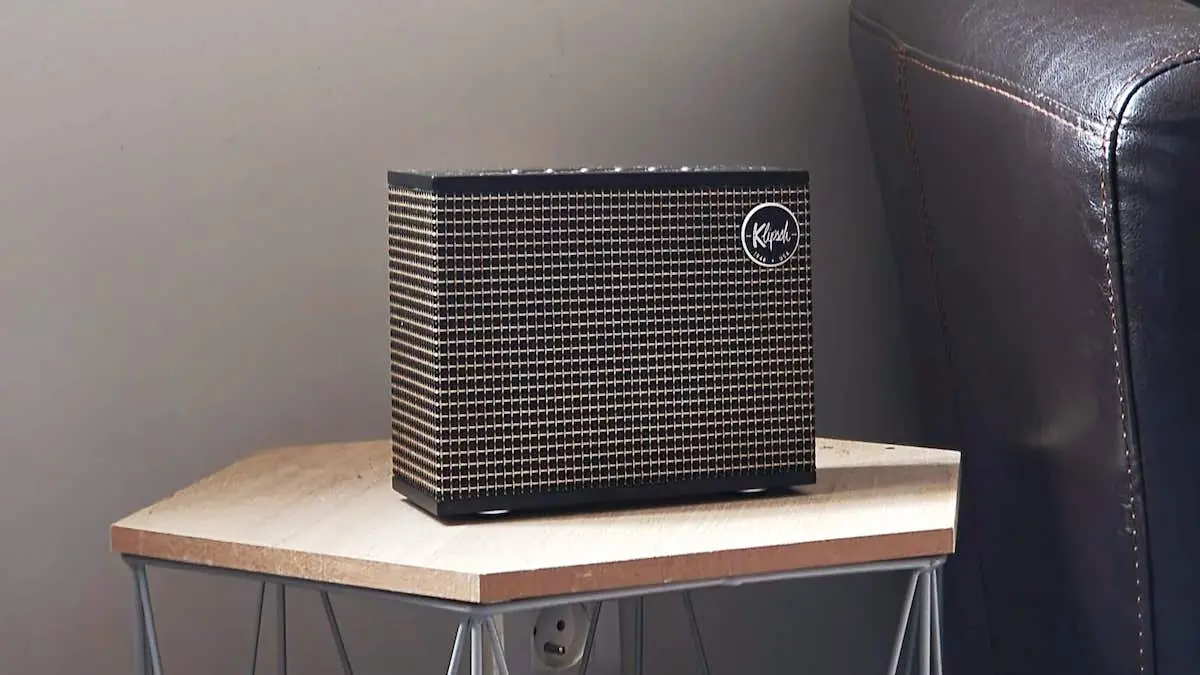
Small speakers used to be judged by volume alone, which was never fair. The Klipsch Heritage Groove speaks to a different buyer: someone who wants a compact box that looks at home beside a turntable, on a kitchen counter, or on a nightstand without screaming “plastic gadget.” For many U.S. shoppers, the restock interest makes sense because retro audio has moved from collector circles into daily living spaces. People want warm design, simple controls, and sound that feels more personal than a flat smart speaker. Coverage from consumer audio shopping updates has also made deal-minded buyers faster to react when familiar models return. This speaker is not trying to replace a full stereo setup. That is the point. It is for apartments, home offices, bedrooms, patios, and casual listening zones where design matters almost as much as the playlist. Klipsch lists the model with real wood veneer, tactile controls, Bluetooth support, hands-free calling, and up to 8 hours of battery life.
Why Retro Audio Demand Keeps Pulling Compact Speakers Back Into View
The funny thing about retro audio is that it does not always mean old technology. Most buyers are not chasing dusty gear from a garage sale. They want the feeling of older hi-fi without the maintenance, cables, and space problems that come with real vintage systems.
Why U.S. shoppers are choosing design-first audio again
A lot of American homes now have open shelves, smaller media consoles, and work-from-home corners that sit in plain sight. A black cylinder speaker may sound fine, but it often looks like an afterthought. A wood-finished compact speaker feels more like furniture.
That matters in a real room. Think about a renter in Chicago with a walnut desk, a small record shelf, and no room for tower speakers. A compact retro Bluetooth speaker can sit under a monitor during the week and move to the kitchen on Saturday morning. It solves a space problem without killing the mood of the room.
The non-obvious part is this: design can make people use a speaker more. When audio gear looks permanent, you leave it out. When you leave it out, you reach for it instead of playing music through a laptop. That small habit shift is where a product earns its place.
The restock story is about trust, not hype
Restocking interest often sounds like a rush story, but with audio gear it usually points to something calmer. Buyers come back to familiar names because sound is hard to judge from a product photo. Klipsch carries weight because the brand has a long heritage in American speaker design, dating back to founder Paul W. Klipsch and its larger hi-fi identity.
That trust does not mean every small speaker is perfect. It means buyers feel safer taking a chance when the design, brand history, and feature set all line up. A portable model with a wood veneer look can feel less disposable than many battery-powered speakers sold beside phone accessories.
For shoppers, the smart move is not panic buying. It is knowing why this category has heat. Retro demand is strongest when the product feels useful now, not when it is only dressed up like the past.
What Makes the Klipsch Heritage Groove Worth a Closer Look
The Klipsch Heritage Groove sits in a narrow lane: small enough for flexible placement, styled enough to be seen, and simple enough for buyers who do not want app menus. That lane is stronger than it looks because many modern speakers have become either rugged outdoor bricks or smart-home devices with microphones at the center.
The appeal starts before you press play
The speaker’s mid-century influence is part of the product, not decoration slapped on late. Klipsch describes it with real wood veneer and tactile spun switches and knobs, which gives it a more physical feel than touch-only controls.
That physical feel matters more than spec sheets admit. Turning a knob gives feedback. A button that clicks feels settled. In a kitchen, bedroom, or office, that can make the speaker feel closer to a small radio than another screen-adjacent device.
Here is the catch: the design also sets expectations. Buyers may expect a warm, room-filling character because the cabinet looks like a tiny piece of hi-fi gear. That can work in its favor for casual listening, but it also means shoppers should understand the size limit before expecting full stereo drama.
Portability changes the way this speaker gets used
A speaker like this is portable in the home-first sense. It can move from desk to nightstand, from bookshelf to porch table, and from apartment living room to weekend rental. It is not the same idea as a rubberized beach speaker thrown into sand and rain.
Klipsch lists up to 8 hours of battery life, Bluetooth wireless technology, and a built-in microphone for hands-free calls. That mix fits daily use better than extreme use. Morning playlist, afternoon podcast, quick call, evening album. That is the rhythm.
The counterintuitive insight: the best buyer for this speaker may not be the loudest music fan. It may be the person who listens often at moderate volume and wants the speaker to blend into a room. For that person, restraint can feel like quality.
How It Compares With Today’s Portable Bluetooth Speaker Market
Portable speakers have split into camps. One side chases waterproof ratings, huge bass, and party lighting. The other side chases home-friendly style, cleaner placement, and a quieter kind of ownership. This model belongs to the second camp.
Why rugged speakers are not always the better buy
Rugged speakers make sense for pool days, camping trips, and jobsite use. They are built to take abuse. But many people buy them for a bedroom shelf, then wonder why the design feels wrong next to books, frames, and a lamp.
A retro Bluetooth speaker makes more sense when the main setting is indoors. You get a product that looks intentional rather than temporary. For a Brooklyn studio, a Nashville music room, or a Phoenix home office, that design fit may matter more than a higher waterproof rating.
This is where shoppers should be honest. If you need a speaker for kayaking, tailgating in bad weather, or heavy outdoor use, choose a rugged model. If you need music beside your coffee mug and record crate, the better choice may be the one that does less but fits better.
Sound expectations should stay tied to size
Small cabinets have limits. A compact speaker can sound lively and pleasant, but it cannot move air like a larger stereo pair. Review coverage has pointed out that the Heritage Groove can offer rich bass for its size, while placement and listening angle can affect the experience.
That is not a flaw unique to this model. It is physics. Put a small speaker against a wall, on a solid surface, and near the listening area, and it will often sound fuller. Drop it in the middle of a large open room, and it may feel smaller than expected.
A practical example: on a kitchen counter near a backsplash, the speaker may feel confident during breakfast. In a wide backyard during a cookout, it may get swallowed by open air. The same product can feel smart in one scene and underpowered in another.
For readers comparing options, a portable audio buying guide can help separate style-first speakers from outdoor-first models before price becomes the only factor.
Buying Timing, Restock Pressure, and Smarter Deal Decisions
Restock stories can push people into rushed choices. That is the part worth resisting. A restock can be useful news, but it should start a buying check, not end one.
What to check before adding it to your cart
Start with the finish, return window, warranty status, and whether the unit is new or certified refurbished. Klipsch has sold certified factory-refurbished versions with warranty language and return details, so shoppers should read the listing carefully before assuming every restock is the same type of inventory.
Next, check where the speaker will live. If it will sit on a desk, measure the space. If it will sit in a kitchen, think about splashes and counter clutter. If it will move between rooms, battery life matters more than if it stays plugged in most days.
The non-obvious detail is finish matching. A wood-look speaker can clash if the room already has strong oak, walnut, or black accents. That sounds picky until the speaker arrives and looks slightly off. Design-first audio rewards slower shopping.
Price is only one part of value
A lower price feels good, but it is not always the full story. Value comes from use. A speaker you play every day at your desk may be worth more than a louder one that stays in a drawer because it looks out of place.
This is why the category has loyal buyers. A portable Bluetooth speaker with a heritage look can become part of a routine. It wakes up a work corner. It makes a small kitchen feel less quiet. It turns background music into something chosen.
Still, buyers should compare alternatives. Look at battery life, input options, size, weight, and return policy. For deal watchers, a Bluetooth speaker deal tracker can help avoid paying more because a restock headline created pressure.
If the speaker matches your room, your listening habits, and your budget, the timing may be right. If you mainly need heavy bass or outdoor toughness, the restock buzz should not make the decision for you.
Conclusion
Retro audio demand is not only nostalgia. It is a response to years of tech products that looked temporary, cold, or too tied to phone ecosystems. People want small gear with character again, especially in homes where every visible object has to earn its space. The Klipsch Heritage Groove makes sense in that shift because it offers a familiar brand name, a compact body, and a design that feels closer to home decor than disposable electronics. It will not replace a full hi-fi system, and it should not be judged like one. Its best role is simpler: everyday listening in rooms where style, touch, and easy placement matter. Before buying, match it to your space and habits, not to the loudest restock headline. If it fits that daily rhythm, this small speaker can feel less like a gadget and more like a piece you keep using.
Frequently Asked Questions
Is the Klipsch Heritage Groove good for small apartments?
Yes, it fits small apartments well because it has a compact footprint, home-friendly styling, and enough presence for near-room listening. It makes the most sense on a desk, shelf, nightstand, or kitchen counter rather than across a wide open living room.
How long does the battery last on this speaker?
Klipsch lists up to 8 hours of battery life on a single charge. Real use can vary based on volume, call use, Bluetooth behavior, and battery age, so buyers who play music loudly all day should expect less than the maximum.
Is this speaker better for indoor or outdoor use?
Indoor use is the stronger fit. It can move around the home and work for porch or patio listening, but shoppers who need a speaker for rough outdoor use, water exposure, or large gatherings should compare rugged models instead.
Does the retro design affect sound quality?
The design does not automatically make sound better, but cabinet shape, driver choice, and placement all matter. The retro style mainly affects how the speaker fits into a room, which can make people use it more often.
Who should buy this speaker?
It suits buyers who care about design, simple Bluetooth listening, moderate volume, and compact placement. It is less ideal for people who want huge bass, stereo separation, smart assistant features, or a speaker built for harsh outdoor conditions.
Can it replace a full stereo system?
No, it should be seen as a compact daily speaker, not a full stereo replacement. A dedicated stereo pair will offer better separation, scale, and room coverage, while this model focuses on convenience and style.
What should I check during a restock?
Check whether the unit is new or refurbished, confirm the finish, read the warranty and return policy, compare current pricing, and make sure the seller is reliable. Restock pressure should never replace basic buying checks.
Why are retro Bluetooth speakers popular again?
People want audio gear that looks warmer and more permanent in the home. A retro Bluetooth speaker offers old-school visual charm with modern wireless convenience, which fits bedrooms, offices, apartments, and casual listening spaces without adding clutter.